The poetic, playful and prophetic musings of quintessential voices trying to keep up with life
Showing posts with label Lesbian. Show all posts

Thursday, March 14, 2013

What’s in a Name?

Recently, a few articles have been written on the topic of women changing or not changing their last names upon marriage. I have long questioned the same system.

When I dated men, I always asked their opinion on the topic, partially because I knew I could never be with someone who expected me to take his name. But the truth is, even with the feminist spirit alive and well in this country, the majority of women still take their husbands’ names.

thenextweb.com
The obvious reason that women take men’s last names makes sense to me: if you want to share a last name with your partner, picking one name is logical. I’m not a big fan of hyphenating names because, as one of the above articles points out, it’s only good for one generation. If someone with a hyphenated name marries another person with a hyphenated name, what do they do?

In my experience, even couples who keep their own names upon marriage still give their children, if they have children, the husband’s last name.

At some point I realized that when a person signs a marriage license, she or he can declare whatever new name she or he chooses. Based on this information, I decided if I ever got married I would legally change my name to Pink Purple Crockpot, as a middle finger to the whole system (and also because it sounds awesome).

So when I began dating women, this line of thinking got more interesting. First, I decided Pink Purple Crockpot just couldn't work for me. Also, I no longer have the privilege of choosing whether or not I want to play into this name changing system. There is no room for two women – there’s no man’s name to take. Making decisions about this tradition became, for me, more than just a fun way to combat patriarchy; it became an actual problem that requires a sensible solution.

Call me a romantic, but I have a real desire to share a last name with my Hypothetical Future Partner.

blog.glamourdrops.com
For me, if my partner or I picked either of our names for both of us to share, the decision would feel symbolic of our relationship. If I took my Hypothetical Future Partner’s name, would it mean she has more power in our relationship? That she wears the pants? That she’s the man? That she won the coin flip? If she took mine, how would I feel about asking her to switch? And, given the hope that my Hypothetical Future Partner and I both have good relationships with our families, how could either of us decide to leave our family names for the others?

It’s interesting being a woman dating a woman, because we've both been socialized into the assumption that our last names would someday change. From a young age, it’s acceptable, even encouraged, for a girl to start doodling Mrs. Name-of-crush-here on her notebook. (And that’s to say nothing of a culture that asks women but not men to name their marital status simply by the title in front of their last names.)

So here I am, in a system that stems from a tradition that has no place for me and my woman loving ways, wondering what I’ll do with my name if I ever get married, knowing that even that simple thing – marriage – is a thing only some people and some states believe I deserve.

Who can blame the lezbos everywhere for keeping their own names, for not buying into any system that has marks of oppression all over it?

But I still want to share a name. I don’t want to make a new name out of nowhere. I don’t want to take and I don’t want to give, I want to share. So my solution is to fit my Hypothetical Future Partner’s name together with mine, just as we’ll attempt to fit our lives together (hypothetically of course). A little give and take. A little of her and a little of me. Compromise.

How does this work in the heterosexual world? Shit, I don’t know. But if people always chose the simple, easier road, we’d be in big trouble.

I understand that professionals that have careers prior to getting married would keep their names. And if you believe that your husband should be the head of your household, then yes, take his name. But otherwise, why not carefully consider the name you’ll (hopefully) be living with for the rest of your life, and be open to doing something nontraditional?

The same questions should be posed about how a proposal works, why only a woman wears an engagement ring, and why a man is told that he can kiss the bride at the end of a wedding (aren't they kissing each other?).

Just because I’m in a situation where I have to devise new strategies with my Hypothetical Future Partner, doesn't mean heterosexuals, particularly those who believe in equality of gender, can't or shouldn't question the systems in which they are included.

If a name is so unimportant, why not give it up for a new one?

Or, as I've argued, if a name is so important that it tells others about who you are – and who you and your partner are together – then why not choose it wisely?

What do you think?

Love,
Kelsey

Wednesday, February 6, 2013

Flirting with Men: The Lesbian Loophole

When I was younger, I dated a lot of guys. In high school I tended toward a "3 month rule," ending most relationships before they had time to get remotely serious. In college I had longer, more fulfilling relationships with guys, but they, like the others, all eventually dissolved.

I came out at the end of college and stopped dating men. I do, however, still tend to flirt with them.

Why does this still happen?

Is it my naturally flirtatious personality? My love of attention? My enjoyment of all very personal, intensely private, and intimate details of other people's lives? An urge to fit into a heternormative lifestyle? Repression of my full lesbian identity?

I honestly don't know. It's likely a combination of all of these, or at least most of them. (Flirting is also a multifaceted term that I'll dissect a little bit later.)

More interesting are the reasons why I haven't given this habit up.

I have this theory that most (and I repeat, most. I'm making generalizations here, people) heterosexual men don't learn how to converse about feelings and emotions until they date their first serious girlfriend. I don't think our society encourages men to express most of their feelings, especially not with each other.

What I get the opportunity to do then, is talk about feelings and emotions with men on a platonic level. Being a lesbian removes me from having an agenda. I have no intention of dating the guy, I'm not looking for a one night stand, in fact, I've completely taken both romance and sex off the table. I'm not threatening to other women and I don't have ulterior motives.

In fact, I would argue that my relationships with men have gotten immensely better since I came out. Gone is that question of if there's something bigger going on between us. Gone are the awkward "are we on the same page" questions. I drop the "I have a girlfriend" line in the first five minutes of our conversation and all of a sudden I have simplified the equation. (This isn't to say that every guy I talk to is into me and that playing the Lesbian Card lets them down easy. This also eliminates their concern that I'm into them when they aren't into me.)

Awhile back, Madie wrote a blog about a court case in Iowa. In short, a man fired a woman for being too attractive, which for him equated to being too seductive. In order, he said, to continue being faithful to his wife, he had to end his professional relationship as a boss to an attractive woman, even though she maintains that she had no interest in him romantically. In essence, he didn't believe he could keep it in his pants with her around, despite her disinterest.

This case demonstrates a deep seeded belief in America that women and men can't be friends, especially if there's any attraction between them. There's too much chemistry, too much seduction, too many SEX THOUGHTS, the theory goes, for men and women to be in platonic relationship with one another.

This is such a detrimental line of thinking. I'm not trying to argue that all women and all men have to be friends, in fact I think there are some decent reasons some men and women are not always friends. But folks: we have so much to learn from each other. Listen, I might be a lesbian, but I have no idea what it's like to be a man. I don't even date them!

When I titled this blog, I used the word "flirting." I've always used the term to label my behavior when I'm asking men about their lives. A more fitting description? Confidently asking personal questions and sticking around to hear the answers. But I've always called it flirting because it seems so ingrained in our culture that men and women can't or wouldn't have a serious conversation about their personal lives without sexual chemistry.

Being a lesbian is a strange but real loophole in the old women-and-men-can't-be-friends way of thinking. Because I don't date men there is a removal of the possibility, the removal of an agenda. So I've managed to avoid the problem myself, but most men and women continue to face this challenge.


I don't get it - because when women (ok, women in my life anyway) hang out, most of what they do is talk about their feelings, their relationships, their ideas about life, etc. I do this with other women constantly, straight and queer alike, without having awkward confusion about if we're into each other. Why wouldn't women and men be able to converse together about these same things without these problems?

All of us, straight or queer, even those of us in relationships, interact often with people we find attractive. That's right, I said it: we - single and committed - are all wandering around the earth feeling attracted to people who aren't our significant others. And you know what those of us who are in monogamous relationships do about it? Well, hopefully, ABSOLUTELY NOTHING.

I know we all like to think that once we fall in love we stop being attracted to everyone else on the planet, but in my experience that's just not true. What's also not true is that if we are attracted to people we must follow our urges. In short, we can be attracted to people we choose not to be with.

There's a problem if we have to fire our employee simply because we're attracted to her or him. There's a problem if men and women can't be friends because they can't handle themselves to have a platonic relationship with someone to whom they may or may not be attracted.

As stated previously, I've mostly avoided this problem, what with my woman-loving and all. But my argument is that rather than denying and ignoring and even avoiding people to whom we feel attracted and possibly missing out on some fantastic friendships, we should learn how to manage sexual attraction in a way that allows us to be both a great friend and faithful to our partner. Self-control, rather than missing out on great friendships, is the key.

I'd love to hear your thoughts.

Love Always,
Kelsey

Wednesday, January 2, 2013

A Letter to My Teenage Self


On a recent road trip across the Midwest, my girlfriend read to me from the book The Letter Q, edited by Sarah Moon. The book is a compilation of letters written by famous queer authors to their teenage selves. It will make you laugh, it will make you cry, it will make you angry and happy and, if you're queer, it'll make you proud.

The book inspired me to write to my teenage self. Although most of these authors are middle aged now and have decades more time and distance from their teenage selves than I do, I decided to write a letter to my 12 year old self as well. I share it with you now, in hopes that you, too, will reflect on the lessons you've learned, the wisdom you've gained, and the experiences you've had - significant or seemingly insignificant - since your years as a teenager.

Dear Kelsey,
You are on the brink of your 13th birthday. This birthday will mark not only your first year as a teenager, but also your first kiss (or at least that's what you'll lead everyone to believe). You're changing, and you know it. I see you trying desperately to fit in with your peers, trying to be someone you're not. But Kelsey, you've always been different.

You don't care about what you wear or about what your hair looks like or about wearing makeup. News flash: your 23 year old self doesn't either. And that's ok. But while we're on the topic, don't wear lipstick to school on that random October day next year because it'll get on your teeth and no one will tell you all day.

I know your body is changing and you aren't sure what to do about it, but I beg you to try to love yourself the way you are. In a couple of years, you'll succumb to pressure and begin to slowly starve yourself. Kelsey, don't do it. I know it's hard to believe now, but you're a beautiful young woman and not eating enough will not solve any of your problems. You eventually learn that, although we still have the occasional battle today.

Another word of caution, my friend. I know, as you know now when you search down deep and listen to that voice inside of you, that your trend of dating guys for short stints has more to do with your insecurities and desire to be accepted than with the hope of any lasting romantic relationships.

When you come out (oh yeah, you're a lesbian...surprise!), you'll promise yourself that you'll never lie to yourself again. Years of repression of your true self will teach you that telling yourself the truth is always, without a doubt, universally better than lying to yourself. Even if it means you still lie to everyone around you (although mostly you'll choose to tell everyone else the truth too). This will change the way you live your life, and it will allow you to love yourself a little bit more.

I have good news from the future, my dear. After years of knowing your life is lacking something, you will go to college and learn how to talk to people about stuff that matters. You will begin to ask other people questions, you will discover a thirst for understanding others in a new way, an exciting way. You also begin to enjoy your family, looking forward to the time you get to spend with them.

As for the faith life that is only right now, right this moment, beginning to form, I will leave that as a question for your future. All I will tell you is that I needn't assist you in this journey, as you will only dive deeper and grow more intrigued with God and faith over time. It will be an adventure, one that I will promise you will be completely worth it, even as it will seem impossible, confusing, and frustrating for many years.

I have to warn you that your first heartbreak will be harder than you can imagine, but you will survive. You will find comfort in the arms of many friends, new and old, and they will hold you up and love you like crazy and you will never be able to repay them (and better yet, they won't expect you to). You will realize who you can count on in the midst of this incredibly painful time, and you will grow new appreciation for the wonderful people in your life. Through all of your pain, in every season, hold on to the hope that good things really can grow from bad, that time and distance really do help heal you, and that you are loved, even when you don't feel that you deserve it. And don't worry, you will love again.

Sometimes you will get very stressed about life and the future, and my advice is to spend time with the people who make you laugh and let you talk about it when you want to.

With love from your future self,
Kelsey

 P.S. You do learn to stop feeling Catholic guilt, but you never learn to sing in the right key (although it won't stop you from singing).

Tuesday, November 20, 2012

The L Word

Views expressed in this blog are solely the author's experience and opinions. They are not intended to speak for other or all queer-identified people.

Two years ago, almost to the day, I came to the beautiful conclusion that I am attracted to women. It was a moment alive with emotion and enlightenment - the dawn of a new day.

Hey, I took this picture!
Others might call it a panic attack (which may or may not have involved my head over my toilet, gasping for air).

It's been quite the journey, and those who know me know that I've changed along the way. I've also changed the language I use to identity myself.

I came out to my parents using not very eloquent language, essentially spitting out that I was "s-s-something other than s-s-straight...even though I might never date a woman."

A couple of years later I comfortably use the term lesbian. Somewhere along the line I claimed words like "bisexual" and "queer" to try to put a name to my...condition.

The summer before I came out, I expressed to my best friend that "uhh...if sexuality really is a spectrum, maybe I'm somewhere on it...?"

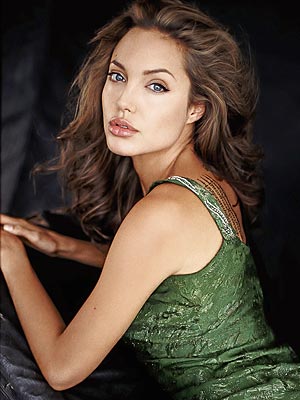
Her response? "Well, Kelsey, I guess I am too. I mean, I'm attracted to Angelina Jolie."

people.com
The point is that in two years I went from "so maybe I don't just like boys" to easily taking the "lesbian" descriptor.

Why is this?

There are a couple of reasons. First of all, as I will explain to anyone who asks, I've grown comfortable with the thought that chances are that I'll settle down with a woman, not a man. I can't guarantee that I will never date a man again, but listen folks. I dated 13 of them before I turned 22. I tried really hard to be straight. 

The more complicated reason that I've taken the fetching "L Word" title is that it's just freaking easier than trying to explain that I may or may not be somewhere on an imaginary spectrum.

I have a friend who identifies as bisexual, but lesbians always assume she's one of "the gays" and straight people always assume she sticks to dating men.

And the truth is, if you lined up every person in this planet, I would probably pick out many more women than men that I find attractive. But to be fair, I haven't seen every person in the world, so I can't say for sure.

But, if you read between the lines here, what I'm admitting is that I am sometimes attracted to men. (Collective gasp.)

Story time! When my girlfriend was first coming out (before we were dating), she said to me one day, "But Kelsey! What if I come out to all of my family and then I end up marrying a man?" And I said to her, "Lisa, are you attracted to me?" To which the obvious response is "yes." And I said, "Then stop worrying about it."

But it's a legit fear, folks. I've spent the last two years coming out to people. That's a lot of time and effort.

I got drinks with a friend a few weeks ago, and we were talking about my lesbian-ship. (Yeah, that's a word.) And I explained this convoluted I-think-I'll-probably-be-with-a-woman-but-I-can't-guarantee-it business and that's when he said it. "You're not even a real lesbian!"

Well shit.

Is that true?

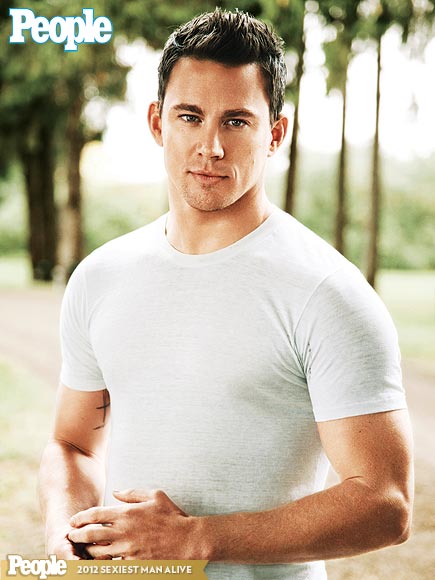
I'm not going to lie to you friends, I'm attracted to the sexiest man alive (which those closest to me either love or hate about me). I'm attracted to some men, sometimes. It happens occasionally.

So here I was, in the midst of another identity crisis - but I was much more mature about it this time, because this time I had a support system. So I talked to every queer identified person in the world and asked them what they thought. (What? You don't believe me? We have a listserv. There's a club. We talk.) And as I was waiting for all of their responses, I came to my own conclusion.

It's my own freaking identity! If I feel like lesbian is the word that fits me best, then I'm going to own it, damn it!

But it has left me with some questions. Why is it so freaking hard to be somewhere on the middle of a spectrum - whether homosexual or heterosexual, female or male, Democrat or Republican? What's with the black and white? What's with the one word answers to open ended questions?

Back in the day when I was in college, I remember reading an article about a woman who identified as a lesbian and married a man. She continued to identify as a lesbian even after the wedding. At the time, I was puzzled by this, but recently I've come to realize the importance of having an identity to which to cling, regardless of who you marry.

But what’s so wrong with calling yourself bisexual? Unfairly, maybe it’s because of the stigma bisexual identified people have to deal with. Maybe it’s because they are seen as indecisive or promiscuous. Maybe it's because there are assumptions on the part of some queer people and straight people alike that bisexuality doesn't exist. Or maybe, in this woman's case, she just felt her identity was a lesbian.

I’d like to say I live under the title of lesbian because it fits me perfectly, but I don’t think that’s true. I've chosen it because it is probably the word with which I most closely identify, but also because it gives me a group - a community I adore - to belong to. And maybe because it’s easier than other options, easier than the gray, somewhere-on-the-spectrum explanation.

I'd love to hear your thoughts.

With love,
Kelsey

Wednesday, September 12, 2012

Queer/Story: Stereotypes & Life Lessons


(Names in this blog post may or may not have been changed. Also, for purposes of this blog, “queer” refers to the naming of a person who does not identify as heterosexual. It caters to the belief that sexual orientation is a spectrum, encompassing lesbian and bisexual people.)

I have a system of categorizing women, based on lots of stereotypes and a little life experience.

There are three categories, upon first view of a woman, that I place her into:
1. This woman is definitely straight:


2. This woman is definitely queer:

3. These women may or may not be queer:

(Photos have been used with permission and were taken from subject's own profile pictures.)

The system has proven very effective, but, to be fair, here are a few examples of my failures:

When I moved to Minneapolis last August, I met a whole new group of people. Up until this point, I would have likely said that stereotyping of any kind was WRONG and we SHOULDN'T DO IT. EVER. But I was single and living in one of the gayest cities in the U.S....what's a girl to do?

Then I met a woman, let's call her Emily. Emily worked for an LGBT organization. She spoke queer language (yes, we have our own language). She dressed in flannel and plaid. My gay-dar went off every time we talked.

Come to find out, Emily is straighter than an arrow. The girl likes men. If Emily was a lesbian, she would certainly be taking the title. But seriously folks. She is into dudes. In fact, Emily often has to come out to people as straight, because she fits so well into lesbian stereotypes. After many conversations about this topic, we named her a cultural lesbian.

Next is a story about two good friends of mine. One, Anna, identifies as heterosexual, and the other, Jamie, identifies as a lesbian. I went through a phase last year in which I teased Jamie about all of the categories she fits into that are stereotypical of lesbians. One day, my example was her tie-dye t-shirt. It was my assertion that that tie-dye made her look gay. She argued that her t-shirt in no way identified her orientation. Anna jumped in, asking if she put on the tie-dye t-shirt if she would look gay. So they switched shirts to prove a point.

Jamie was wearing Anna's form fitting green sweater (and looking mighty uncomfortable, I might add). Anna had on Jamie’s t-shirt. And let me be clear - Anna looked as straight as ever.

So it wasn't the tie-dye.

And at some point I began to reconsider the stereotyping I had become accustomed to. Maybe people didn't need to be categorized. Maybe I don't need to make assumptions about other people's orientations.

Enter Sarah, my dear bisexual friend who just started grad school. She told me about a girl in her class who made a comment about the rainbow sticker on Sarah's water bottle. (Indicator number one.) I asked a few questions. Does she have short hair? What kind of clothes does she wear? But the next piece of information I got was even better. THIS GIRL PLAYS RUGBY. Folks, rugby and softball are lesbian gold mines. Game, set, and match. (Ok, I realize that's a tennis expression, but just go with it.)

"Sarah!" I exclaimed. "This girl has got to be queer. She. Plays. Rugby. And loves LGBT stuff!" Sarah was a little more skeptical. But then the girl asked Sarah out to drinks. Done and done. And over the course of the night, this girl shared with Sarah her love of women. And I patted myself on the back for being so wise, without ever meeting this girl, I might add.

Final story. Literally 10 minutes after coming out as queer to my then-self-identified-straight-friend Lisa, she pulled a wallet out of her back pocket. "Lisa!" I exclaimed. "You know that's super stereotypical lesbian of you, right?" Her face reddened and she stammered out something about not knowing that.

We were dating three months later.

If I work to present myself as female, why can’t I work to present myself as lesbian? I don’t believe dresses and heals are embedded in my mind as things I need to wear simply because I have a vagina. There’s a heck of a lot of socialization that goes into the way I was taught to dress – and act – simply because I was born with female parts.

So why would it be problematic to also consider that some people present as queer? That it may not be because I have flannel on, but because I consciously chose to have flannel on, that identifies me. Unless you live in north country, because people, please. It's cold up there and people need to stay warm somehow.

To be fair, I don’t fit a lot of lesbian stereotypes. I like my long hair. I wear dresses, the occasional pair of heals, and I sometimes even shave my legs. But then again, I’m in a softball league, I own a lot of flannel, and my favorite outfit is a t-shirt and jeans. Just as I do with my femininity, I also make some decisions about how queer I do or do not look. (Ok, and a lot of it is based on me being particularly lazy when it comes to my presentation.)

I was in a conversation with a friend of mine last week. The friend, who identifies as heterosexual, was laughing about a time when she was rocking a “lesbian outfit” and someone made a comment about her looking like a lesbian.

“Oh my gosh, right?” I teased. “It’s so frustrating when people assume I’m straight.”

So you tell me. Stereotyping in the queer world: good or bad? Is there such thing as looking straight or looking queer? Am I correct in my categorization of my fellow bloggers?

LinkWithin

Related Posts Plugin for WordPress, Blogger...