Before I cut my hair off about a month ago, a lot of my
friends at law school already knew I was planning to do it. I got asked a lot why I wanted to get a pixie cut. No one asked
in a rude way, just with curiosity – like, if my hair looked good at the length it was,
why would I want to have short hair? I explained time and time again that I just wanted to.
I felt claustrophobic because my thick, fluffy hair around
my face and neck. I missed the freedom of not having to style my hair in some
form. I just didn’t feel like myself with my longer hair. I’ve had short hair
more often than long in the past five or so years, so it wasn’t a scary
decision.
Short hair just seems natural on
me.It’s sassy, it’s fearless, it’s low-maintenance, and it’s unapologetic: everything
I strive to be.
After I got my hair cut, most reactions were positive. But one guy asked me if my
boyfriend supported me cutting my hair off so that guys wouldn’t hit on me as
much. I laughed, then I calmly tried to explain that my
boyfriend happens to think I have a pretty face, and that it’s easier to see my
pretty face when I don’t have so much hair in the way… And that I feel confident that he’s not trying to purposely make me uglier.
This conversation bothered me in the same way that all those
articles online from douchey bros, who claim that short-haired women are
ruining the fun for men, do - because they all assume one vital falsehood:
That I (and other women) are actively thinking about pleasing
men and how all our actions fulfill that goal.
I did not cut my hair for men. I didn’t cut it for my
boyfriend, or my father, or my male friends, or the men I pass on the street. I did not keep my hair long for men. I didn’t keep it long
for my boyfriend, or my father, or my male friends, or the men I pass on the
street.
I grew out my hair because I wanted to. And I cut it off
because I really, really wanted to.
If cutting my hair off upsets sexist douchebags and
makes me less appealing to random men on the street, that’s actually a plus in my
book. It weeds out the kind of guys who will objectify me on first sight, or judge me without getting to know me, or assume that I care about their opinions on the sexual attractiveness of my body.
I wear high-waisted pants because they make me feel
fabulous. I have a nose ring because it makes me happy. I have short hair
because it makes me feel confident. I wear running leggings as pants sometimes
because they’re comfortable and opaque. None of these actions are harmful to other people, and they are deeply and personally satisfying for me.
Women do a lot of things without thinking about the
reactions or approval of other people – men and women included.
I want
Jake to think I’m beautiful. I want my dad to approve of my choices. I want to
make my grandpa proud. But if it comes down to making myself happy and making
other people happy, I’m going to go with actions and decisions that make me
happy and fulfilled.
Your decision for how to cut and style your hair, what
clothes to wear, or how to decorate your body are all personal decisions that
only you can make - and these decisions do not make you any less of a woman or deserving of respect.
If you want pink hair down to your waist or no hair at all - have 15 piercings on your
face alone or just your ears - two full sleeve tattoos or a butterfly tattoo on your lower back - and those things will fulfill you deep in your soul (or maybe you just really want them), then let your freak flag fly.
No one should be making that decision for you – especially trolls
on the internet. If a few less douchetools don’t think you’re sexy for being
your most complete, confident, satisfied self, then I’m pretty sure you're the one who lucked out.
So, during the
past few weeks I have had a lot of different experiences centering on the theme
of identity. One specific example of
this was the STM Dialogues.This event
was wonderful, and allowed for different members of the STM community to tell
their stories.All of the stories were
focused on the various issues that people face when determining or owning their
identity.I actually submitted a piece
myself to be performed, which was about some of the questions and transitions I
have faced in my life as an adopted child.In thinking of what I wanted to write for this post, and thinking on the
theme of identity, I was brought back to a previous idea I had had for a blog
post, which talked about one of the most famous adopted kids of all time:
Superman.
I’ve been on a
bit of a Superman kick lately, I’ll admit.Ever since I saw Man of Steel, and
found season one of Lois and Clark: The New
Adventures of Superman on Amazon for like $10, I’ve been
Oh, the 90's goodness.
borderline obsessed.It’s weird to, because Superman never
appealed to me as much as other heroes growing up.He was too much of a goody-goody, which made
him boring (although I did LOVE Lois and
Clark when I was a kid…and still love it…I recently bought season
two).I always liked Batman better (DC
Universe-wise, anyway), because he was a little grittier, and less
black-and-white.He works in black “and
sometimes very, very dark gray” (haha, LEGO movie reference).Really, though, I could never relate to
Superman the way I sometimes could to other heroes.He was too good, to unshakable, too…super.
However, what
makes Superman more interesting to me now is his struggle with his identity,
which is highlighted in Man of Steel
(here come the SPOILERS).Basically, the
whole movie can be boiled down to Superman’s struggle of balancing his identity
as Kal-El of Krypton, and Clark Kent of Earth.In the movie, when Clark first realizes he is not his parents’
biological child, he is understandably confused and distressed (and on top of
that, he can lift a freaking bus...puberty is confusing enough without all of
that thrown in the mix).His dad,
Jonathan Kent, doesn’t want Clark to let anyone know he has his superhuman
powers, because he is afraid people wouldn’t be able to handle it and would
fear and hate Clark (the results of this order prove disastrous, which is
typical when you’re forced to deny who you are…we all remember what happened to
Elsa in Frozen).He does
encourage Clark to try
and figure out why he was sent to Earth, and what
his other parents’ intentions for him were.However, while Jonathan only has good intentions at heart, his actions really
add to Clark’s confusion, distress, and fear of himself.
As a teenager,
Clark goes through the somewhat typical stage of independence-seeking that all
teenagers go through, and as an adopted kid, this includes the occasional “You’re
not my real father/mother” retort that makes you want to punch him in the
head.However, tragedy strikes (as it
usually does), and Clark comes to regret those comments (as he should).Fast forward, though, and Clark’s a grown up
man traveling from place to place in search of his identity (the song “I Can Go
the Distance” from Hercules would fit
in well with this part of the movie). Eventually, he finds a Kryptonian spaceship in
the Artic, in which he is able to learn more about his home world and the parents
who gave him up so that he could survive its destruction.When he encounters General Zod (the bad guy),
Clark is faced with the decision to either help the General turn Earth into a
new Krypton, or protect the people of Earth from destruction.
OBVIOUSLY he chooses
to protect the people, but if you really break down this decision, it’s a lot
harder than it might seem at first glance.Clark has spent his whole life feeling different, as if he doesn’t
really belong anywhere.He searches for
any clues that will answer the millions of questions that are constantly swarming
through him about where he comes from, and who he is.When he finally discovers everything, he is
given the option to completely embrace the identity he has found…or create a
new identity based on who he was, and who he is.As his Krypton father Jor-El states, “Born on
Krypton and raised on Earth, you had the best of both and were meant to be the
bridge between two worlds.”
Space dad with baby Superman
Superman is neither
just Kryptonian, or just of Earth, but both, and he eventually realizes this
and finds his purpose to be the protection of his adopted home.While it is an extreme example, I’m sure
there are a ton of adopted kids who
could resonate with some part of Superman’s journey of identity.I know I can, but most especially with his
conclusion.I have no desire to meet my
biological parents or know where I “come” from.I am completely happy with my life, and I my family is the most
important thing in the world to me.However,
after years of anger and pain in regards to my biological parents, I have come
to understand that they are a part of my identity as well, especially my biological
mother.If she hadn’t made the choice to
give me up, I wouldn’t be where I am right now, surrounded by all of the people
I love.Like Superman at the end of Man of Steel, I understand that both my
parents and my biological parents (where I am and where I come from) are hugely
important to how I see myself and relate to the rest of the world.Their decisions and actions have influenced
my identity, and I wouldn’t be me if I never had all of them.I think it’s important, in any search for
identity, to acknowledge what has come before and what is happening now.We are formed and molded by every aspect of
our lives, whether large or small, whether we realize it or not.I am not Superman, but Superman isn’t so hard
to relate to anymore.
I read comic books. So far they have not been mentioned on this blog and thus far a cisgendered male has not written here either, so today I break two molds and hope to begin a discussion on identity - who we are, how we define ourselves, how others define us, and what all that means, if anything. But bear with me, because to get started we have to talk about comic books. When I was in grad school I rekindled my childhood love for superheroes by reading Batman, Batwoman, Batgirl, Nightwing, Red Robin, and every other comic featuring the Batfamily. The mythology found in comics, the ethical struggles that oscillate between nihilism and teleology, the question of evil and the hope of a better future mirrored much of my seminary education; comics were just more fun to read than Augustine’s Confessions. I was never much of a Superman person simply because we all know that in a fight Batman would win, every time. Batman, Batwoman, Batgirl et al. have had better writers, artists, story lines, movies, along with the best villains in comics, not to mention the GLAAD award wining lesbian hero, Batwoman, aka Kate Kane, and the first openly trans person in mainline comics (spoilers though, it was in the recent Batgirl 19, you’ll have to read it yourself).
However, it has been Superman’s identities as Clark Kent and Superman that have been philosophized over, and I blame Kill Bill 2 for popularizing that.
What sets Superman apart is the alter ego that according to Bill all other heroes have. Batman is really Bruce Wayne. In Bill’s line of thought it is Bruce that becomes Batman when he puts on the costume, yet underneath it all he is still Bruce. Superman, on the other hand, is always Superman and the costume that he wears is that of Clark Kent, the bumbling, lacking confidence and somewhat unreliable journalist. Dressing like a human with a suit and tie (without as much class as JT mind you) is the costume that covers Superman. Bill assumes that there is within us and Superman a self, an identity that is lasting, something that makes us us, something that we do not become but are born with. Even if we sometimes wear a cape and tights with our underwear on the outside to cover our identity up, the core of our identity remains nevertheless.
I took a lot of philosophy and religion classes in college and suffice it to say, college ruined my life. The seemingly simple realties of existence were no longer as effortless to understand as they had once been; even the complexities of our existence that I had learned to live with through my adolescence in Iowa were now more convoluted than I imagined.
I remember learning the phrase, “Cogito ergo sum”, I think, therefore, I am. My professor, who came to class with neat and combed hair that became more and more uncouth with each new thought said to us, “I am a thinking thing, a thing that thinks, but I cannot know that you think and you cannot know I think. I think, I am, you, I’m not so sure about.”
I think, and so I am, you think, I assume, and so you are. But what exactly are we? What is this I; who are you? Does Bruce Wayne become Batman when he changes clothes, or through the course of his life has Bruce transitioned into Batman and is only, truly, himself when fighting crime on the streets of Gotham? Is there a core to our being, some immutable essence to us that makes us us or is the self the result of approximately 100 trillion cells functioning together while electrons fire to and fro, connecting synapses that create an illusion of consciousness and a semblance of the self?
You may have noticed that most paragraphs have began with “I” statements, “I read”, “I took”, “I remember”, and “I think” and if you’ve made it this far I hope you are wondering who does Nate think he is? How dare he write in such a self aggrandizing and narcissistic style on Her/Story about comic books and Kill Bill! Well, I am a straight, white, middle-class, United Methodist pastor currently living in Fairfield, Iowa. I have two sisters, one older and one younger making me the middle child, not only of siblings but of generations, found in the space between but also within generations x and y. Currently I have two cats, even though I had dogs as a kid. I grew up with both of my biological parents and they are still living, though none of my grandparents are. I am in a loving and life-giving relationship that is, for now, long distance. I like camping and I think manicures feel great. Whenever I shave I use a preshave oil and a badger brush to apply shaving cream followed by a moisturizer under eye cream because I like how it makes me feel and look. Whiskey may be my favorite drink, especially ryes, but when I go out to a bar I usually get a Guinness. Most days I go to the gym. My Myers Briggs personality type is INFJ. I am a right handed and a progressive, feminist, liberation theologian with an appreciation of queer theory that reads comic books, but you already knew that. I play video games from time to time and care more than a person in their late twenties probably should about their social media presence. These attributes point to aspects of my personality and identity, yet on their own, none of them makes me me. Some of these traits are shared with many other persons, others are not. In the realm of personality typing INFJ is the least common, shared by maybe 5% of humanity, yet within this 5% exists innumerable possibilities of personality and definitions of identity. Whatever I am, however my identity is found and developed, both through my own self-definition and the ways that others define me, is found in the totality of these, for lack of a better word, things.
All of these things mean something to me, and you, regardless of whether you share a trait or attribute with me or not, you understand the word as a representation of said thing. Our understandings, however similar, may be different. Take the word, “Queer.” In an essay on queer theory Annamarie Jagose wrote, “If a potentially infinite coalition of sexual identities, practices, discourses and sites might be identified as queer, what it betokens is no so much liberal pluralism as a negotiation of the very concept of identity itself...queer is less an identity than a critique of identity.” (emphasis was the authors). For myself, queer is a continual critique of what I understand to be normative, a way of embracing myself as a masculine and feminine person while remembering that masculine and feminine are socially constructed. For others this may not be the case and probably isn’t. Some persons that claim queer for themselves my not see my life as queer at all. My identity is not the same as it is for others that identify as queer, especially as I understand myself to be a cisgendered male that is attracted to females.
For example, contrast my identity and understanding of queer with that of Jack Halberstrom.
Jack is a professor of English and she is also the director of the Center for Feminist Research at USC. He teaches courses in queer studies, gender theory, literature, art, film and has written many books, recently on “Gaga Feminism”. Now, I switched back and forth between the pronouns “she” and “he” originally for Jack, but from now on Jack will be he because as he said in an interview, “You know, people are kind of calling me he nowadays. I’m going with that.” While Jack goes with he, he is also known by a few folks as Judith, others call him Jude and Jack has found comfort in the mixing of names, pronouns and identities, allowing them to be what they are. Jack identifies himself as butch but readily admits that when he started using the term in the 1990’s it meant something to him that it may not mean to people now. There are assumptions about “butch” that seem to point to some masculine ideal, yet an ideal creates a normative classification where there is one real butch identity at the center with other butches on the margins only attempting to be truly butch. The idea and identity of butch has been colonized for some, though for Jack butch is a term and idea without a center. This is similar to Jack’s gender identity. Jack calls himself a “blanket” saying that he is blank in terms of gender and just added the “et” to it. Jack’s queer identity if found in the space between Judith and Jack, where masculinity and femininity meet and overlap, separate and dance together in whatever ways he wants them to and whatever ways feel right and speak to his identity at that moment in time and space. There are some similarities between Jack and myself, yet we are nevertheless different when it comes to our understanding of what it means to act on our queer identities. Jack sums up why this is ok, but still complicated, “Nobody should accept one standard way of saying things, but I want this to be clear too, that at the same time you can’t have endless varieties of people naming themselves, we do live in a world of categories. Some of these categories have contemporary currency and some don’t.”
It has almost become cliche in postmodern conversations of identity to view ourselves as the sum of our social relationships and to use these relationships to define ourselves in such a way that does not present one stand way of saying things. We are the culmination of our DNA combined with the interactions we have had, a mix of nature and nurture, we are the persons and situations that we have loved, hated and felt indifferent about. Who we are can be understood through the lenses of our socio-economic status, gender, sexuality, education, ethnicity, and so on. For me, it is jarringly peaceful to realize that I have been, and continually am, shaped and developed by forces beyond myself. I am, whatever I am, becoming who I am and will be through this ever growing sum of social relationships. Identity, it seems, is about becoming, developing and changing.
But what of the narrator of our story, the internal editor that seeks to make sense of our social relationships, that attempts to integrate the new experiences of who we are becoming with who we have been? What is it that creates continuity and stability in this ever changing and ever becoming self? To make sense of this I have to consult the Doctor.
Doctor Who has been around for 50 years now and the Doctor has lived through a number of transitions and changes through the centuries of his life. The Doctor’s body changes with every new incarnation, as does the Doctor’s style and personality. My favorite Doctor is 11 and I am partial to Amy and Rory as the best companions ever, plus, bow ties are cool.
Throughout all of the incarnations, the various changes, the transitions from being known for wearing a long and multicolored scarf to an overcoat with a suit and chuck taylors to bow ties and a fez, something of the Doctor has remained constant. The Doctor is always the Doctor. In the recent episode, “The Rings of Akhenaten” this continuity through change was witnessed. The Doctor, and his new mysterious companion Clara Oswin Oswald, save a young girl from a Sun that is worshiped as a God. The “old God” sometimes called “grandfather” feeds on the souls of others, which in this episode means their stories. It is our stories, our memories, that shape us and make us who we are.
Our identity, the essence of who we are, may be found in who we have been, the stories that shape us, and all of the experiences that bring us to where we find ourselves now. It is the story of the Doctor, the stories of those hundreds of years and adventures that has made the Doctor who he his and the memory of these stories, the chapters that keep getting added, create and continue his ever evolving identity and soul.
We all have a unique story to tell, and in it we come to know our ever becoming identity. I may not know who I am, but I know who I have been and I have a sense of what I want to become, what stories I want to live. Memory can be a fickle thing, but without it, who would we be?
So who are you? What story will you tell and how will your soul, that spirit of you (that I still believe in even if I can never exactly say what that ineffable essence is) that creates continuities between all your stories, edit, revise, and become who you are invited to be?
On a recent road trip across the Midwest, my girlfriend read to me from the book The Letter Q, edited by Sarah Moon. The book is a compilation of letters written by famous queer authors to their teenage selves. It will make you laugh, it will make you cry, it will make you angry and happy and, if you're queer, it'll make you proud. The book inspired me to write to my teenage self. Although most of these authors are middle aged now and have decades more time and distance from their teenage selves than I do, I decided to write a letter to my 12 year old self as well. I share it with you now, in hopes that you, too, will reflect on the lessons you've learned, the wisdom you've gained, and the experiences you've had - significant or seemingly insignificant - since your years as a teenager.
Dear Kelsey,
You are on the brink of your 13th birthday. This birthday will mark not only your first year as a teenager, but also your first kiss (or at least that's what you'll lead everyone to believe). You're changing, and you know it. I see you trying desperately to fit in with your peers, trying to be someone you're not. But Kelsey, you've always been different.
You don't care about what you wear or about what your hair looks like or about wearing makeup. News flash: your 23 year old self doesn't either. And that's ok. But while we're on the topic, don't wear lipstick to school on that random October day next year because it'll get on your teeth and no one will tell you all day.
I know your body is changing and you aren't sure what to do about it, but I beg you to try to love yourself the way you are. In a couple of years, you'll succumb to pressure and begin to slowly starve yourself. Kelsey, don't do it. I know it's hard to believe now, but you're a beautiful young woman and not eating enough will not solve any of your problems. You eventually learn that, although we still have the occasional battle today.
Another word of caution, my friend. I know, as you know now when you search down deep and listen to that voice inside of you, that your trend of dating guys for short stints has more to do with your insecurities and desire to be accepted than with the hope of any lasting romantic relationships.
When you come out (oh yeah, you're a lesbian...surprise!), you'll promise yourself that you'll never lie to yourself again. Years of repression of your true self will teach you that telling yourself the truth is always, without a doubt, universally better than lying to yourself. Even if it means you still lie to everyone around you (although mostly you'll choose to tell everyone else the truth too). This will change the way you live your life, and it will allow you to love yourself a little bit more.
I have good news from the future, my dear. After years of knowing your life is lacking something, you will go to college and learn how to talk to people about stuff that matters. You will begin to ask other people questions, you will discover a thirst for understanding others in a new way, an exciting way. You also begin to enjoy your family, looking forward to the time you get to spend with them.
As for the faith life that is only right now, right this moment, beginning to form, I will leave that as a question for your future. All I will tell you is that I needn't assist you in this journey, as you will only dive deeper and grow more intrigued with God and faith over time. It will be an adventure, one that I will promise you will be completely worth it, even as it will seem impossible, confusing, and frustrating for many years.
I have to warn you that your first heartbreak will be harder than you can imagine, but you will survive. You will find comfort in the arms of many friends, new and old, and they will hold you up and love you like crazy and you will never be able to repay them (and better yet, they won't expect you to). You will realize who you can count on in the midst of this incredibly painful time, and you will grow new appreciation for the wonderful people in your life. Through all of your pain, in every season, hold on to the hope that good things really can grow from bad, that time and distance really do help heal you, and that you are loved, even when you don't feel that you deserve it. And don't worry, you will love again.
Sometimes you will get very stressed about life and the future, and my advice is to spend time with the people who make you laugh and let you talk about it when you want to.
With love from your future self,
Kelsey
P.S. You do learn to stop feeling Catholic guilt, but you never learn to sing in the right key (although it won't stop you from singing).
Views expressed in this blog are solely the author's experience and opinions. They are not intended to speak for other or all queer-identified people.
Two years ago, almost to the day, I came to the beautiful conclusion that I am attracted to women. It was a moment alive with emotion and enlightenment - the dawn of a new day.
Hey, I took this picture!
Others might call it a panic attack (which may or may not have involved my head over my toilet, gasping for air).
It's been quite the journey, and those who know me know that I've changed along the way. I've also changed the language I use to identity myself.
I came out to my parents using not very eloquent language, essentially spitting out that I was "s-s-something other than s-s-straight...even though I might never date a woman."
A couple of years later I comfortably use the term lesbian. Somewhere along the line I claimed words like "bisexual" and "queer" to try to put a name to my...condition.
The summer before I came out, I expressed to my best friend that "uhh...if sexuality really is a spectrum, maybe I'm somewhere on it...?"
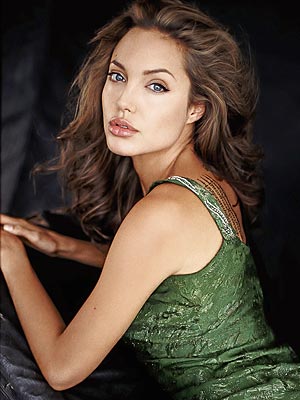
Her response? "Well, Kelsey, I guess I am too. I mean, I'm attracted to Angelina Jolie."
people.com
The point is that in two years I went from "so maybe I don't just like boys" to easily taking the "lesbian" descriptor.
Why is this?
There are a couple of reasons. First of all, as I will explain to anyone who asks, I've grown comfortable with the thought that chances are that I'll settle down with a woman, not a man. I can't guarantee that I will never date a man again, but listen folks. I dated 13 of them before I turned 22. I tried really hard to be straight.
The more complicated reason that I've taken the fetching "L Word" title is that it's just freaking easier than trying to explain that I may or may not be somewhere on an imaginary spectrum.
I have a friend who identifies as bisexual, but lesbians always assume she's one of "the gays" and straight people always assume she sticks to dating men.
And the truth is, if you lined up every person in this planet, I would probably pick out many more women than men that I find attractive. But to be fair, I haven't seen every person in the world, so I can't say for sure.
But, if you read between the lines here, what I'm admitting is that I am sometimes attracted to men. (Collective gasp.)
Story time! When my girlfriend was first coming out (before we were dating), she said to me one day, "But Kelsey! What if I come out to all of my family and then I end up marrying a man?" And I said to her, "Lisa, are you attracted to me?" To which the obvious response is "yes." And I said, "Then stop worrying about it."
But it's a legit fear, folks. I've spent the last two years coming out to people. That's a lot of time and effort.
I got drinks with a friend a few weeks ago, and we were talking about my lesbian-ship. (Yeah, that's a word.) And I explained this convoluted I-think-I'll-probably-be-with-a-woman-but-I-can't-guarantee-it business and that's when he said it. "You're not even a real lesbian!"
Well shit.
Is that true?
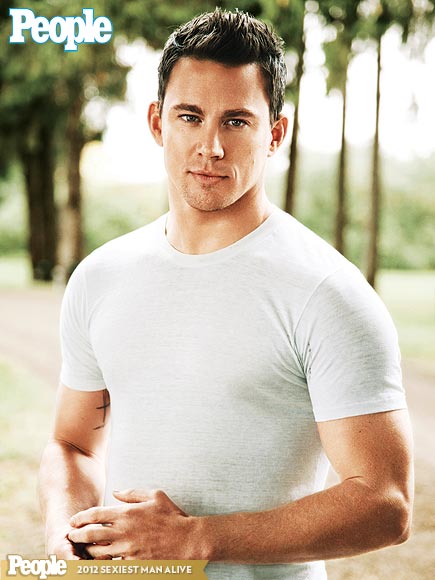
I'm not going to lie to you friends, I'm attracted tothe sexiest man alive(which those closest to me either love or hate about me). I'm attracted to some men, sometimes. It happens occasionally.
So here I was, in the midst of another identity crisis - but I was much more mature about it this time, because this time I had a support system. So I talked to every queer identified person in the world and asked them what they thought. (What? You don't believe me? We have a listserv. There's a club. We talk.) And as I was waiting for all of their responses, I came to my own conclusion.
It's my own freaking identity! If I feel like lesbian is the word that fits me best, then I'm going to own it, damn it!
But it has left me with some questions. Why is it so freaking hard to be somewhere on the middle of a spectrum - whether homosexual or heterosexual, female or male, Democrat or Republican? What's with the black and white? What's with the one word answers to open ended questions?
Back in the day when I was in college, I remember reading an article about a woman who identified as a lesbian and married a man. She continued to identify as a lesbian even after the wedding. At the time, I was puzzled by this, but recently I've come to realize the importance of having an identity to which to cling, regardless of who you marry.
But what’s so wrong with calling yourself bisexual? Unfairly, maybe it’s because of the stigma bisexualidentified people have to deal with. Maybe it’s because they are seen as indecisive or promiscuous. Maybe it's because there are assumptions on the part of some queer people and straight people alike that bisexuality doesn't exist. Or maybe, in this woman's case, she just felt her identity was a lesbian.
I’d like to say I live under the title of lesbian because it fits me perfectly, but I don’t think that’s true. I've chosen it because it is probably the word with which I most closely identify, but also because it gives me a group - a community I adore - to belong to. And maybe because it’s easier than other options, easier than the gray, somewhere-on-the-spectrum explanation.